Here's everything you need to know: what it is, how it works, who it's for, and what to actually expect if you book a session.
Why Pelvic Floor Health Gets Ignored
Before we get into the treatment itself, it's worth asking why this topic stays so quiet.
Part of it is embarrassment — leaking urine feels like a deeply personal failure rather than what it actually is: a weakened muscle group, no different from a weak knee or a bad back. Part of it is misinformation. Search "bladder leaks" online and you'll find a flood of quick fixes, absorbent product ads, and vague advice to "just do your Kegels," with no explanation of how to do them correctly or whether they're even working.
The truth is, most people doing Kegels at home are engaging the wrong muscles, or not engaging them with enough intensity or consistency to make a real difference. Pelvic floor muscles, like any other muscle group, need targeted, progressive, measurable training to actually strengthen — and that's very hard to achieve on your own, in your living room, guessing.
What Is Emsella?
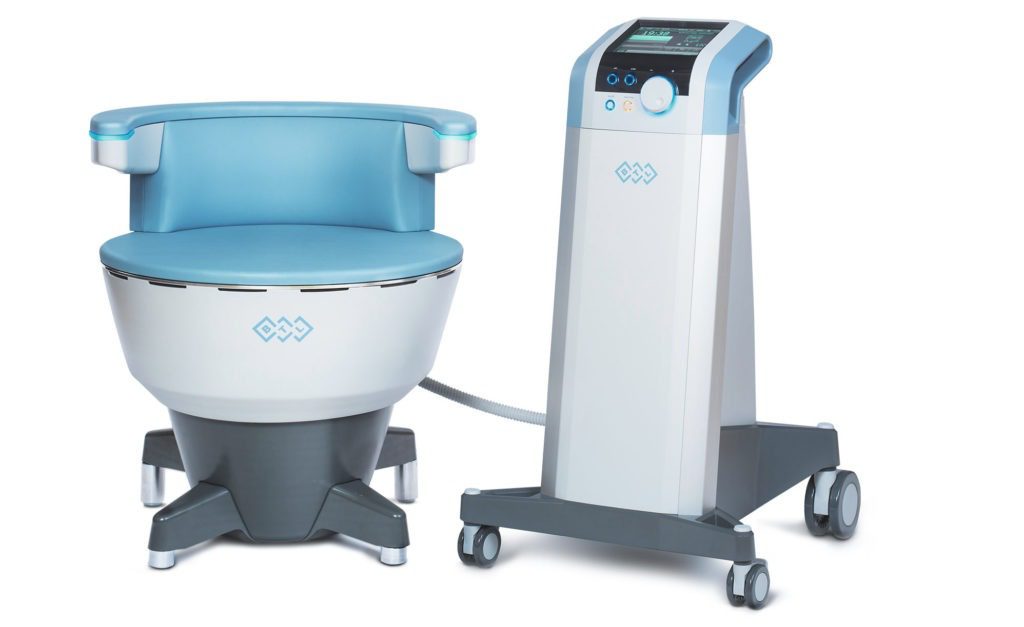
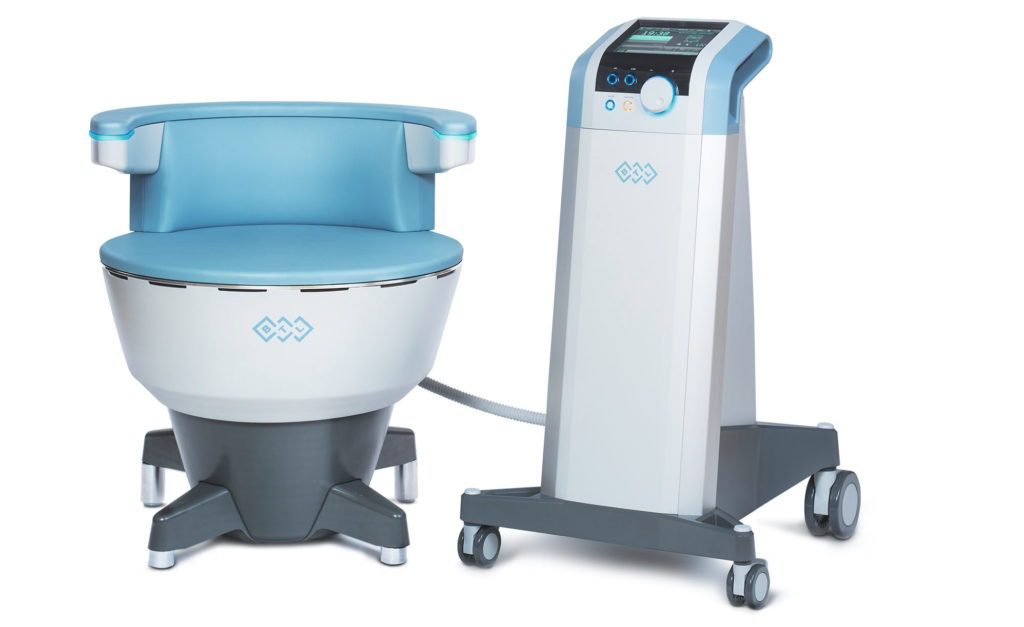
Emsella is an FDA-approved, non-invasive treatment for pelvic floor weakness. You sit on it, fully clothed, for about 28 minutes. No undressing, no needles, no anaesthetic, no downtime.
Underneath the seat, the device uses HIFEM technology — High-Intensity Focused Electromagnetic energy — to stimulate deep pelvic floor muscles supramaximally. In plain terms: it triggers thousands of involuntary muscle contractions, reaching muscle fibres that voluntary exercise typically can't access on its own.
In a single 28-minute session, Emsella delivers the equivalent of roughly 11,200 Kegel contractions. To put that in perspective, even a highly disciplined person doing Kegels correctly might manage a few hundred a day — and most people doing them at home aren't engaging the right muscles at all. Emsella removes the guesswork entirely.
How Does It Actually Work, Physiologically?
The pelvic floor is a hammock-like group of muscles that supports the bladder, uterus, and bowel. When these muscles weaken — from childbirth, hormonal changes, ageing, or simply years of underuse — the result can be reduced bladder control, a sense of heaviness, or reduced sensation.
HIFEM energy penetrates directly into the pelvic floor muscles, triggering deep, involuntary contractions the same way a strength-training programme would gradually build muscle in the gym — except concentrated and vastly accelerated. Over a course of sessions, this leads to measurable improvements in muscle tone, thickness, and control.
Because it works at the muscular level rather than just managing symptoms, the results tend to be structural, not just cosmetic — the muscle itself is genuinely getting stronger.
Who Is Emsella For?
Emsella is commonly used for:
Stress urinary incontinence — leaking when you cough, sneeze, laugh, exercise, or lift something
Postpartum pelvic floor weakness, whether delivery was vaginal or via C-section
Perimenopausal and menopausal pelvic floor changes, as hormonal shifts affect muscle tone
General pelvic floor strengthening, even proactively, before symptoms become noticeable
Mild pelvic organ prolapse support in some cases (this should be discussed directly with a clinician)
It's a particularly good option for women who've tried Kegels without success, who aren't ready for — or don't want — surgical intervention, or who simply want a clinically proven approach rather than guesswork from social media.
It's worth noting Emsella is not typically recommended during pregnancy, or for patients with certain implanted electronic devices (like pacemakers) or metal implants in the treatment area — your consultation will cover any contraindications specific to you.
What Does a Session Actually Feel Like?
You stay fully clothed and simply sit on the chair, much like sitting in a normal seat. As the device activates, you'll feel a strong, rhythmic pulsing or tapping sensation deep in the pelvic floor. It's an unusual sensation at first — some patients compare it to an intense, deep muscle twitch — but it isn't painful, and the intensity is adjusted to your comfort level throughout.
Most patients read, check their phone, or simply relax through the 28 minutes. There's no recovery time needed — you can go straight back to work, the school run, or the gym afterward.
How Many Sessions Do You Need?
Most treatment plans involve six sessions, typically scheduled twice a week over three weeks. Some patients notice a difference early — a stronger sense of control, fewer accidental leaks — but results build cumulatively as the muscle strengthens throughout the full course.
As with any muscle-strengthening programme, results vary from person to person depending on the starting point, severity, and consistency. Occasional maintenance sessions are sometimes recommended down the line, much like returning to the gym after time away.
Emsella vs. Traditional Kegel Exercises
Kegels (at home) Emsella
Muscle engagement Often incorrect or inconsistent Full, targeted engagement every session
Contractions per session A few dozen, if done correctly ~11,200
Guidance Self-guided, hard to verify Clinically supervised
Time commitment Ongoing, daily, indefinitely 6 sessions over 3 weeks
Clothing / prep N/A Fully clothed, no prep
This isn't to say Kegels are pointless — they're a great maintenance habit. But for someone starting from a place of real weakness or symptoms, Emsella gives the muscle a running start that's very difficult to achieve through self-directed exercise alone.
Frequently Asked Questions
- Does Emsella hurt? No. It feels like a strong, rhythmic muscle contraction — intense, but not painful. The intensity is adjusted throughout your session for comfort.
How soon will I notice results? Some patients report improvement within the first couple of sessions, though results generally build over the full six-session course as the muscle strengthens.
Is it safe? Emsella is FDA-approved and non-invasive, with no needles, incisions, or anaesthesia involved. As with any treatment, a consultation will confirm it's appropriate for your specific situation.
Can men use Emsella too? Yes — pelvic floor weakness and incontinence also affect men, particularly after prostate surgery, and Emsella can be used for male pelvic floor rehabilitation as well.
Will I need to keep coming back? Pelvic floor muscles, like any muscle, can weaken again over time without maintenance. Some patients return for occasional top-up sessions, similar to returning to a fitness routine.
Is there any downtime? None. You can resume normal activities — work, exercise, childcare — immediately after each session.
Why This Matters More Than People Realise
Incontinence isn't just physically inconvenient — it quietly reshapes behaviour. Women skip the gym, avoid trampoline parks with their kids, stop trusting a sneeze in public, or simply resign themselves to "that's just what happens now" after childbirth or with age. None of that has to be the default, and none of it should be treated as something to just live with.
As our founder, women's health specialist Giselle Gerka, puts it: clinical care should be evidence-based, accessible, and something that restores confidence — not an afterthought, and not something patients should have to self-diagnose from social media.
Is Emsella Right for You?
If you've been managing symptoms quietly, or you're simply curious whether a non-surgical option could help, the best next step is a consultation. We'll talk through your history, what you're experiencing day to day, and whether Emsella — or another approach entirely — makes the most sense for you.
Book a consultation at Gerka Clinic, Stillorgan, to find out more.